
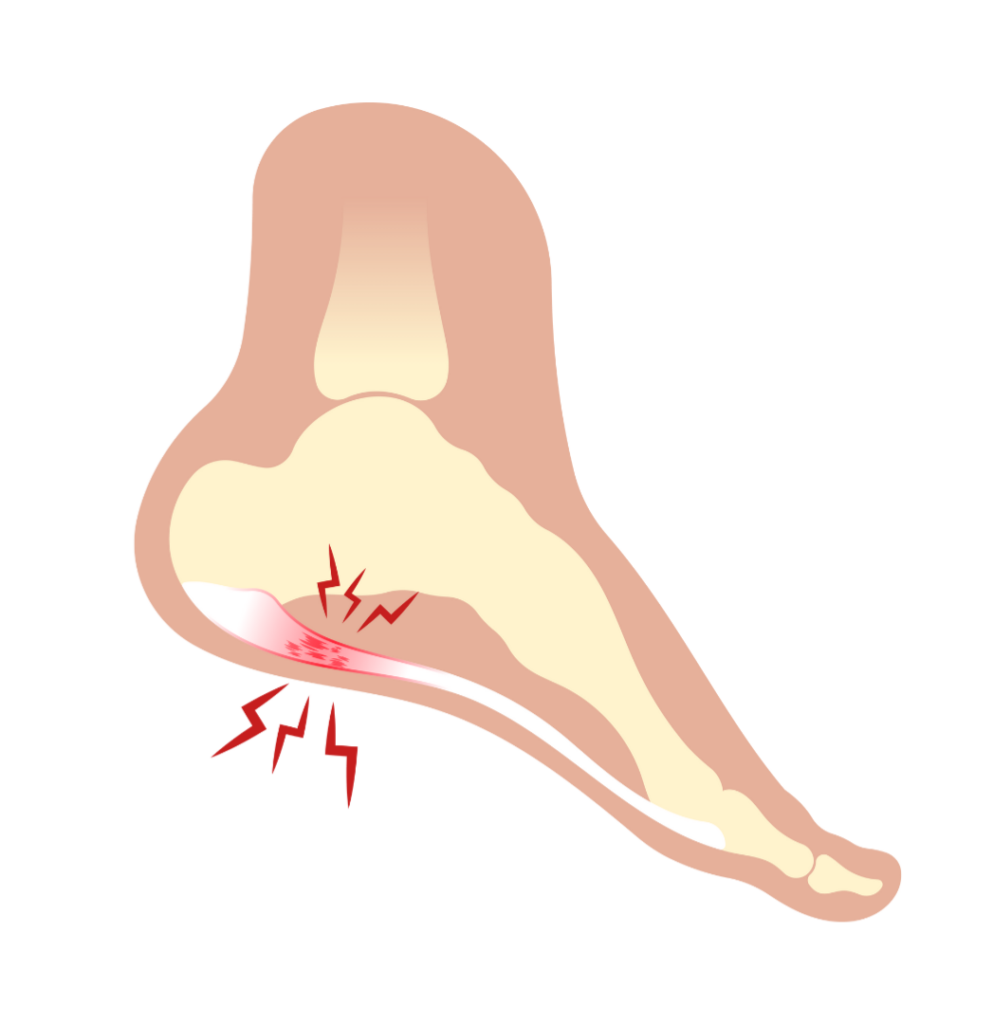
Plantar fasciitis is a common foot condition that can cause pain in the heel and/or arch of the foot. This page will explain what plantar fasciitis is, what causes it, the symptoms you might experience, and treatment options.
What is Plantar Fasciitis?
Plantar fasciitis is inflammation of the plantar fascia, a ligament that stretches from your heel to your toes and supports the arch of your foot. When this ligament is overstretched or strained, it can cause pain and tenderness in your heel.
Causes of Plantar Fasciitis
There are several factors that can contribute to plantar fasciitis, including:
- Excess Pronation: This is when your foot rolls inward too much when you walk or run.
- Tight Calf Muscles: Tight calf muscles can pull on the plantar fascia and cause inflammation.
- High Arches: People with high arches may have less shock absorption in their feet, which can put extra stress on the plantar fascia.
- Flat Feet: Flat feet can also contribute to plantar fasciitis by not providing enough support for the arch of the foot.
- Sudden Increase in Activity: If you suddenly increase your activity level, you may put too much stress on your plantar fascia.
- Poorly Fitting Shoes: Shoes that don’t provide enough support or cushioning can contribute to plantar fasciitis.
Symptoms of Plantar Fasciitis
The most common symptom of plantar fasciitis is pain in the heel and arch of the foot, especially when you first get out of bed in the morning. The pain may also be worse after you have been sitting or standing for a long period of time. In some cases, the pain increases the longer that you have been on your feet.
Treatment Options for Plantar fasciitis
There are several treatment options for plantar fasciitis, including:
- Rest: Reducing activities that aggravate your pain can help the plantar fascia heal.
- Ice: Applying ice to your heel for 10 minutes, break for 10 minutes and again for 10 minutes, several times a day, can help reduce inflammation.
- Stretching: Stretching your calf muscles and plantar fascia can help improve flexibility and reduce pain.
- Orthotics: Orthotics are shoe inserts that can help support the arch of your foot and reduce stress on the plantar fascia. Custom orthotics are made specifically for your feet by a Chiropodist or other trained healthcare professional and are designed to make your feet work as efficiently as possible and reduce the stresses and strains that caused the pain.
- Physical Therapy: A physical therapist can teach you specific exercises to strengthen and stretch the muscles in your foot and ankle.
- Plantar Fasciitis Compression Sleeve: Wearing a plantar fasciitis sleeve can support your plantar fascia and reduce heel and arch pain – while you are waiting for custom orthotics to be manufactured or if you are participating in activities for which you cannot wear shoes.
- Shockwave Therapy: This is a newer treatment that uses sound waves to stimulate healing and regenerate the plantar fascia.
- MLS Laser Therapy: MLS Laser therapy uses specific wavelengths of light to reduce inflammation and pain and to promote healing.
When to See a Chiropodist
If you are experiencing pain in your heel or arch of the foot, it is important to see a Chiropodist (who is specially trained to treat foot diseases, disorders and dysfunctions) to get a diagnosis and discuss treatment options. Early diagnosis and treatment can help prevent the condition from worsening.
Additional Considerations
While anti-inflammatory medication can help reduce pain, it’s important to address the underlying cause of plantar fasciitis to prevent the pain from returning. A Chiropodist or other healthcare professional can assess your individual situation and recommend the most appropriate treatment plan.
Are You Looking for a Foot Specialist in Oshawa, Ontario?
At The Foot Advantage, we can help. Our office offers a variety of advanced, effective treatment options for all kinds of painful conditions. Ready to schedule an appointment? Contact us online or call our Oshawa office at 905-728-FOOT (3668).