
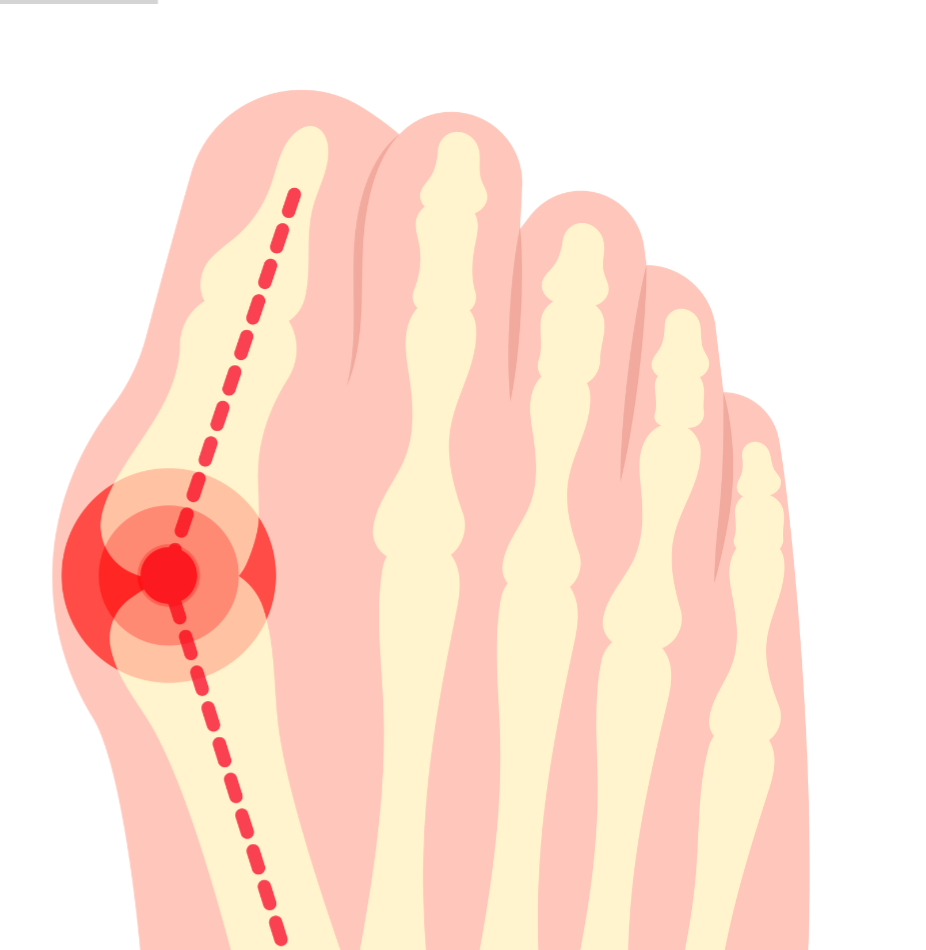
What are Bunions?
Bunions, medically known as hallux valgus, are bony bumps that form on the side of the foot at the base of the big toe joint. They develop when the bones in the front part of your foot move out of place, causing the tip of your big toe to be pulled toward the smaller toes and forcing the now enlarged joint at the base of your big toe to stick out. This misalignment can lead to pain and swelling, making it difficult to walk or wear shoes comfortably.
Cause of Bunions
Understanding the causes of bunions can help in their prevention and management. Common factors include:
- Genetic Factors: If bunions run in your family, you’re more likely to develop them. Genetic predisposition can affect the structure and mechanics of your feet and cause the stresses that result in bunions.
- Footwear Choices: High heels, tight shoes, and footwear that squeezes the toes can contribute to the formation of bunions by placing undue pressure on the toes.
- Other Contributing Factors: Conditions such as arthritis, injuries, and certain neuromuscular disorders can also increase the risk of bunions.
Symptoms of Bunions
Bunions often start as a small bump but can gradually worsen over time. Key symptoms include:
- Visual Signs: A noticeable bump on the outside of the big toe joint.
- Pain and Discomfort: Persistent or intermittent pain in the big toe joint, which can worsen with prolonged walking or standing.
- Impact on Daily Activities: Difficulty wearing certain types of shoes, limited range of motion in the big toe, and swelling or redness around the joint.
Diagnosing Bunions
Early diagnosis can help manage symptoms and prevent further complications. Here are some steps to diagnose bunions:
- Self-assessment Tips: Look for signs such as a protruding bump on the side of the big toe, changes in the shape of your foot, or difficulty finding comfortable shoes.
- When to See a Healthcare Professional: If you experience persistent pain, difficulty walking, or severe swelling, it’s time to consult a healthcare provider.
- Diagnostic Methods Used by Professionals: Your Chiropodist may perform a physical examination, suggest X-rays to assess the severity, and discuss your symptoms and footwear habits.
Treatment Options for Bunions
Treatment options for bunions vary depending on the severity of the condition, but non-surgical methods are often effective in managing symptoms and preventing further progression. At our Chiropody Clinic, we specialize in providing non-surgical treatments tailored to your needs. Here are some of the options available:
Non-surgical Treatments
- Footwear Changes
- Comfortable Shoes: Wear shoes with a wide toe box, low heels, and good arch support to alleviate pressure on the bunion and reduce discomfort. Often a more rigid and curved sole in the forefoot can dramatically improve comfort.
- Avoid High Heels: High-heeled shoes can exacerbate bunions by forcing your toes into the front of the shoe, increasing pressure on the affected area.
- Orthotic Devices
- Custom Orthotics: Custom-made shoe inserts can help redistribute pressure away from the bunion, provide better foot alignment, and offer overall support.
- Toe Spacers and Bunion Pads: These devices can help reduce friction and pressure on the bunion, providing additional comfort.
- Medication and Pain Management
- Over-the-Counter Pain Relievers: If you can take them, nonsteroidal anti-inflammatory drugs (NSAIDs) like ibuprofen can help reduce pain and inflammation.
- Ice Packs: Applying ice packs to the bunion for 20 minutes several times a day can help manage swelling and pain.
- Physical Therapy and Exercises
- Strengthening Exercises: Specific exercises can help strengthen the muscles around the bunion and improve foot mechanics. Examples include toe stretches, toe flexing, and picking up small objects with your toes.
- Stretching: Regular stretching exercises can improve flexibility and reduce tension in the feet, helping to alleviate bunion-related discomfort.
Surgical Treatments
While at The Foot Advantage, we focus on non-surgical options, it’s important to understand the surgical treatments available for severe cases:
- Bunionectomy: Removal of the bunion and realignment of the bones.
- Osteotomy: Cutting and realigning the bones to correct the deformity.
- Arthrodesis: Fusion of the joint to correct severe bunions and relieve pain.
Why Non-Surgical Treatments?
Non-surgical treatments are often preferred because they are less invasive, have shorter recovery times, and can effectively manage symptoms for many patients.
By addressing the underlying causes and making lifestyle adjustments, non-surgical treatments can provide significant relief and improve your quality of life. As surgery is not always successful, we recommend considering surgery as a last resort when you have nothing to lose. That is, if you are in constant pain.
If the bunions are not causing pain, or you have not exhausted all conservative measures, you have a lot to lose if the surgery is unsuccessful. That is, you may be in pain that you didn’t have before!
Are You Looking for a Foot Specialist in Oshawa, Ontario?
If you have bunions and are looking for effective solutions at The Foot Advantage, we can help. Our office offers a variety of advanced, effective treatment options for all kinds of painful conditions. Ready to schedule an appointment? Contact us online or call our Oshawa office at 905-728-FOOT (3668).