
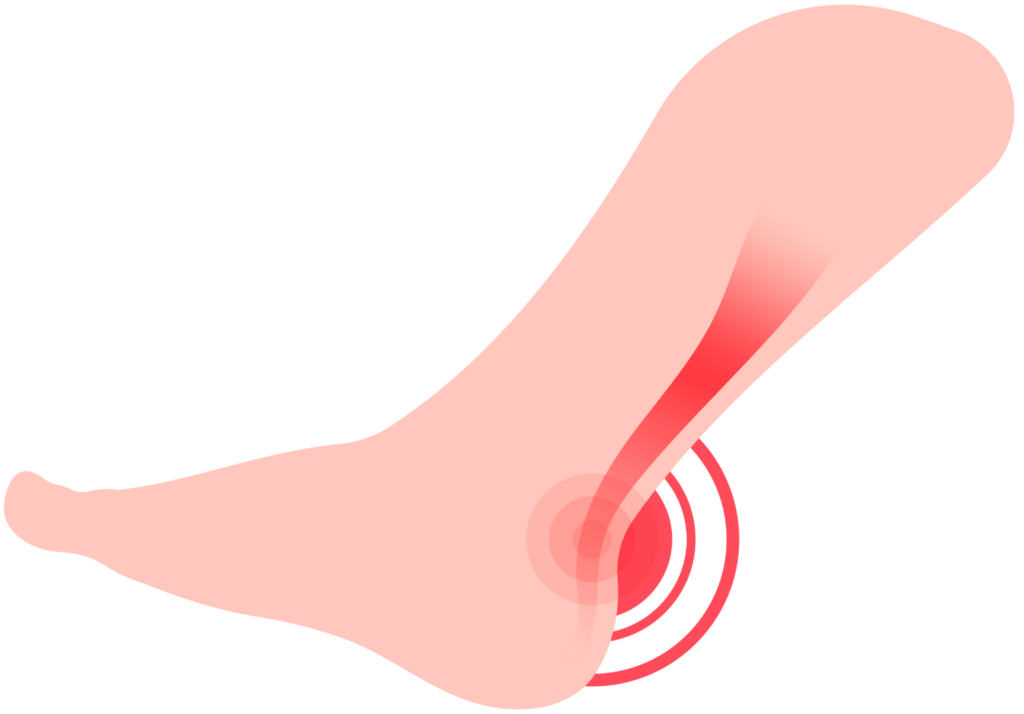
The Achilles tendon is a strong, thick band of tissue at the back of your ankle that connects your calf muscles to your heel bone and helps you walk, run, and jump. When the Achilles tendon becomes irritated, inflamed, swollen or painful, the condition is known as Achilles tendinitis. It is sometimes known as Achilles tendinosis and/or Achillodynia.
The condition can be caused by overuse, such as excessive running, jumping, or other high-impact activities that strain the Achilles tendon.
A sudden increase in activity, like starting a new exercise routine or increasing the intensity of your workouts too quickly, can also bring it on. Tight calf muscles can put extra stress on the Achilles tendon. Shoes that don’t support your feet well can also increase the risk of Achilles tendinitis.
Where is Achilles Tendinitis Felt?
The primary location for Achilles tendinitis symptoms is at the back of your ankle, right where the Achilles tendon connects your calf muscles to your heel bone.
Here’s a breakdown of the Achilles tendinitis symptoms and where you might feel them:
- Pain and Stiffness: This is often felt directly in the Achilles tendon, particularly in the morning or after activity. It can range from a mild ache to a sharp pain. In some cases, there is an associated calf pain due to tightness in the muscle.
- Swelling and Warmth: The area surrounding the tendon may become swollen and feel warm. You might also notice a lumpy feeling along the tendon.
- Tenderness: The tendon can be tender to the touch, and you may feel discomfort when pressing on it anywhere along its length.
- Difficulty Moving: You might experience difficulty walking, running, or even just pushing off your foot, especially when you first start moving.
How It Can Affect the Feet
- Reduced Mobility: Achilles tendinitis can make it difficult to walk, run, or do everyday activities.
- Risk of Tear: If left untreated, the Achilles tendon could tear, which may require surgery or a long recovery and therapy to repair.
- Development of a posterior heel spur and/or bursa: The painful enlargement that can develop at the back of the heel is sometimes called “pump bump.”
Treatments
- Rest: Give your tendon time to heal by avoiding activities that cause pain.
- Ice: Apply ice to the sore area to reduce pain and swelling.
- Stretching: Gentle stretching of the calf muscles can help relieve tension on the Achilles tendon.
- Proper Footwear: Wearing shoes with good support and cushioning can help reduce stress on the tendon. Flatter shoes place more significant stress on the tendon. An elevated heel can be very helpful. In some cases, a shoe with a rigid forefoot rocker sole is also helpful.
- Physical Therapy: A physical therapist can show you exercises to strengthen the Achilles tendon, loosen tight calf muscles, reduce calf pain and prevent future problems.
- Custom foot orthotics: Custom foot orthotics are devices designed to make your feet operate as efficiently as possible and address mechanics that may be contributing to your pain so that pain and inflammation can be resolved. In Achilles tendinitis, there may be mechanics that contribute to the calf muscles pulling too hard on the Achilles tendon. The orthotics will be designed to reduce the stresses on the tendon to within normal levels, so the pain and inflammation can settle down.
- Massage: A Registered Massage Therapist can help to loosen a tight calf that may be pulling too hard on the tendon.
- See a Doctor: If the pain doesn’t get better, a doctor might suggest other treatments like medication or, in severe cases, surgery.
See a Chiropodist
A Chiropodist can determine the mechanical causes of the excess strain on the Achilles tendon and assist you with recommending the appropriate characteristics in footwear, providing custom foot orthotics to correct problem mechanics, if necessary, helpful exercises, compression devices and medications, and therapies like MLS Laser Therapy or Shockwave Therapy.
At The Foot Advantage, we’re committed to helping you overcome Achilles tendinitis and get back to your active lifestyle. Contact us today to schedule an appointment and start your journey to pain-free feet!