
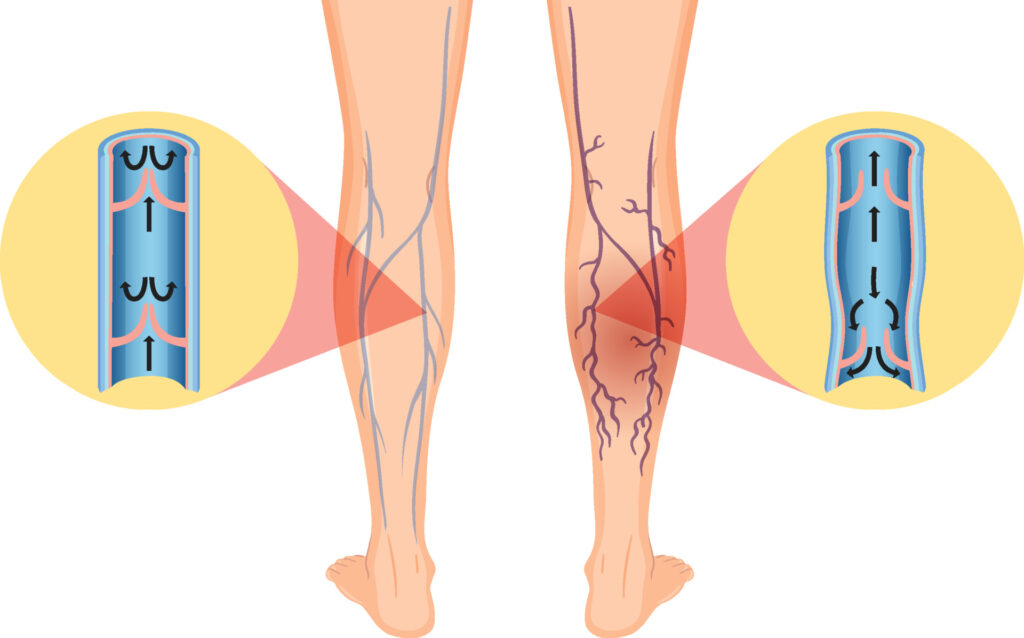
Poor circulation in the legs and feet can be caused by several conditions that affect blood flow and fluid movement in your lower extremities. Some of the most common conditions include Peripheral Arterial Disease (PAD), Venous Insufficiency, Varicose Veins, and Lymphedema. These conditions can lead to discomfort and, if left untreated, may cause serious complications.
How to Know If You Have Poor Circulation
If you’re wondering how to know if you have poor circulation, look for symptoms such as cold feet, cramping, numbness, or changes in your skin colour. Poor circulation in the feet can also cause itching, swelling, and pain, making it essential to recognize the signs early. Understanding when poor circulation is dangerous is crucial. Without proper treatment, it can lead to severe health issues, including slow-healing sores, infection, tissue damage, and even the risk of amputation. Always seek medical attention if you suspect you are affected by any of the conditions discussed here.
Conditions That Affect Circulation
- Peripheral Arterial Disease (PAD)
- What It Is: PAD occurs when the arteries, which carry blood from the heart to the body, become narrowed or blocked due to factors like high cholesterol and smoking. This reduces blood flow to your legs and feet.
- Symptoms: Cold feet, pain, cramping, numbness, and sores that are slow to heal.
- Treatment: Lifestyle changes, medications, and in severe cases, surgical procedures to restore blood flow.
- Venous Insufficiency
- What It Is: This condition occurs when the veins in your legs struggle to return blood back to the heart. Blood and fluid can pool in the legs, leading to swelling, skin changes, and discomfort.
- Symptoms: Swelling, pain, skin changes, sores that are slow to heal, and itching.
- Treatment: Compression stockings, medications, and sometimes procedures to improve vein function/flow.
- Peripheral Vascular Disease (PVD)
- What It Is: Similar to PAD, PVD involves poor blood flow, but it affects both arteries and veins. It can cause discomfort, numbness, and changes in skin color in the legs and feet.
- Symptoms: Pain, numbness, and skin color changes.
- Treatment: Medication, lifestyle changes, and sometimes surgery to improve circulation.
- Varicose Veins and Varicosities
- What They Are: Varicose veins are swollen, twisted veins visible under the skin, often in blue or purple hues. Varicosities, also known as spider veins, are smaller, web-like veins.
- Symptoms: Heavy, achy, or tired legs, swelling, visible veins, and in some cases, itching.
- Treatment: Compression socks for varicose veins, swelling and fatigue in standing occupations (known as compression therapy), lifestyle changes, and procedures like sclerotherapy or laser treatments to remove or close the affected veins.
- Lymphedema
- What It Is: Lymphedema occurs when the lymphatic system, which helps remove waste and toxins, doesn’t drain fluid properly, leading to fluid buildup.
- Symptoms: Swelling in the legs and feet, tight skin, difficulty moving around, and sometimes itching.
- Treatment: Compression therapy, physical therapy, and in some cases, surgery to improve lymphatic drainage.
When Is Poor Circulation Dangerous?
Poor circulation in the feet and legs can become dangerous if left untreated. It can lead to severe complications, such as chronic wounds, infections, and in extreme cases, tissue death, which might require amputation. The often-asked question, “will poor circulation kill you?”, is a serious one and people should know the answer. While it may not directly cause death, the complications arising from untreated poor circulation can be life-threatening.
Why It Matters
These conditions can make your feet feel uncomfortable, possibly making walking and standing difficult, but most importantly, may lead to serious health issues if not properly addressed. Proper foot care and timely medical intervention are crucial to managing these conditions and preventing complications.
How We Can Help
Conditions that affect circulation, such as Peripheral Arterial Disease (PAD) and Venous Insufficiency, can often be managed with lifestyle changes, medications, and the use of compression socks for circulation to improve venous return. It is important to see your family doctor if you have any of these concerns and if something has changed or you have not previously brought them to the doctor’s attention.
At The Foot Advantage, we specialize in addressing foot complications related to poor circulation. Our team works closely and in collaboration with doctors and visiting nurses to provide comprehensive care, referring when appropriate, with the aim of preventing complications and ensuring that any issues that arise are effectively managed.
If you’re experiencing symptoms of poor circulation, don’t hesitate to reach out. Early intervention can make all the difference in maintaining your foot and general health.