
Do you struggle with knee pain that won’t go away?
You may have had X-rays, CT scans, or MRIs, only to be told everything looks normal. Yet, the pain persists. Even if your doctor diagnoses mild arthritis or patellofemoral syndrome, there could be another reason for your discomfort.
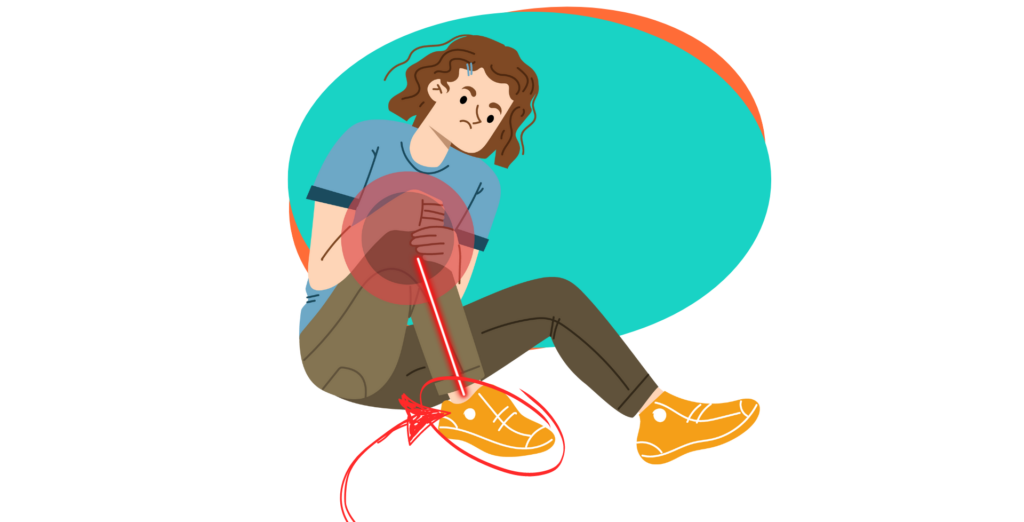
Your foot and leg structure could be contributing to your knee pain. If you aren’t sure why you’re experiencing knee pain, here are three foot-related causes that might be responsible:
- Overpronation
Overpronation happens when your feet roll inward too much while standing. This inward roll affects the positioning of your shin bone (tibia) and the bone on the outside of your knees and ankles (fibula). These bones make up the lower part of your knee joint.
When overpronation twists these bones out of alignment with the thigh bone (femur), it causes improper rubbing. This can lead to pain and damage to the joint’s cartilage and bones over time.
- Flat Feet or High Arches
Flat feet and high arches both throw your knees out of alignment. Misalignment causes your kneecap to track improperly, which leads to rubbing against the tibia and fibula. This often causes pain when standing or walking. Over time, the back of your kneecap may also become damaged.
- Poor Footwear
Wearing shoes without the right support puts strain on your knees. Old, worn-out shoes or those that don’t fit well can cause your feet to roll inward or outward too much. This misalignment puts stress on your knees and affects your entire leg.
Other issues, like uneven leg lengths, bowed legs, knock knees or tight calf muscles, can also cause knee pain. These issues can also impact your hips or lower back.
Osteoarthritis as Another Cause of Knee Pain
Knee pain is often blamed on osteoarthritis (OA). However, the real issue might be misalignment in your lower limbs. OA usually develops after years of wear and tear. Many people experience knee pain for years, even when no visible damage shows up in X-rays or scans.
Misalignment often causes pain before any structural damage occurs. Over time, it can wear down the cartilage. When arthritis appears, it’s often blamed for the pain, though misalignment may be the real cause.
Standard X-rays, usually taken while lying down, might not show this misalignment. These tests don’t capture the joint in a weight-bearing position.
To know if misalignment is causing your knee pain, a test of your lower limb mechanics is needed. This includes evaluating your feet. Correcting misalignment early can prevent severe issues like osteoarthritis.
Effective Solutions to Relieve Knee Pain Linked to Foot Problems
Strengthen Your Thigh Muscles to Support Knee Alignment
Strengthening your thigh muscles helps stabilize your knee joint and reduce pain. Strong quadriceps guide your kneecap and support proper movement. This reduces strain on the knee.
Exercises like squats, lunges, and leg presses target the quadriceps and hamstrings. Stretching and strengthening your calf muscles can improve leg stability and ease knee strain. Here are some stretches and strength exercises for your reference:
However, if your leg alignment is off, these exercises alone may not be enough. A foot specialist can help.
A Foot Specialist Can Help Identify Foot-Related Knee Pain
A foot specialist or Chiropodist can assess whether your foot or leg structure is causing your knee pain. They may recommend:
- Footwear Recommendations: Shoes designed to provide proper support.
- Targeted Exercises: Stretching and strengthening routines to address weak or tight muscles.
- Custom Foot Orthotics: Orthotics to correct foot mechanics, improve alignment, and reduce knee pain.
How Custom Foot Orthotics Help
Custom foot orthotics address your unique mechanics that contribute to the problem. The foot often goes out of position because of the angle at which the leg approaches the ground due to rotation in the hips, bowed legs or knock knees, or a twist in the forefoot or rearfoot.
Custom foot orthotics are designed to address the misalignment that can affect the efficiency of your walking, the shock-absorbing ability of the feet, and rotational or twisting stresses that can affect the ankles, knees, hips and/or lower back, as well as any leg length discrepancy.
By making sure that your lower limbs are properly aligned, mechanical stresses on your knee are minimized. Occasionally, the osteoarthritis has progressed too far to make a significant impact on your pain, in which case, a consultation with a surgeon is likely appropriate.
Physical Therapies for Knee Pain Linked to Foot Issues
Physical therapies can be beneficial if your knee pain is linked to foot issues.
Physiotherapists can assist with treatments such as MLS laser therapy, which can help reduce inflammation and pain. Shockwave therapy is another solution that aids in reducing pain and promoting the regeneration of affected tissues. The therapist can also recommend appropriate strengthening and stretching exercises.
A Chiropodist can provide treatment with these modalities if pain and inflammation exist within the foot.
Don’t Ignore Your Knee Pain
If foot or leg issues might be causing your knee pain, contact a Chiropodist for a thorough evaluation. The team at The Foot Advantage is here to help.
The Foot Advantage – Your Sole Support